Reviewing Free-ish Since 1865 Juneteenth Month Design
As a designer who spends half my life staring at digitized paths and the other half pulling bobbins out of jammed machines, I approach every new machine embroidery design with a healthy dose of skepticism. We have all been there: you download a file that looks crisp on the screen, only to watch it turn into a bird’s nest of thread on your favorite hoodie. That is why when I recently evaluated the Free-ish Since 1865 Juneteenth Month design, I was not just looking at aesthetics. I was looking for structural integrity, stitch logic, and real-world viability for my craft business clients.
This particular piece falls squarely into the Holidays category, but its application goes far beyond a single day of celebration. It is a statement piece. The phrase itself carries historical weight and contemporary resonance, making it a powerful choice for personalized gifts and custom apparel. But does it stitch well? Let us break down how this design performs when the needle actually hits the fabric.
First Impressions and Visual Personality
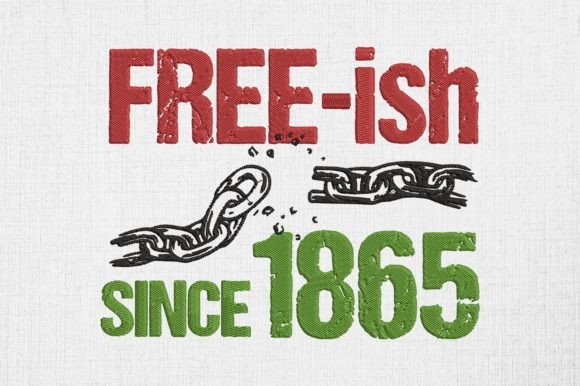
The first thing that strikes you about the Free-ish Since 1865 Juneteenth Month layout is its balance. It avoids the cluttered look that plagues many text-heavy embroidery files. The typography feels intentional, likely utilizing a mix of satin stitch for bold emphasis and potentially running stitch or lighter fill stitch areas for secondary elements. This contrast is crucial. If every letter were dense with fill stitch, the fabric would pucker, and the garment would feel stiff.
The mood here is celebratory yet grounded. It is not overly cartoonish, which makes it versatile. I can easily see this working on a high-end boutique tote bag just as well as it would on a casual sweatshirt. For Etsy sellers and small shop owners, this versatility is gold. You are not limited to one niche; you are creating a design asset that appeals to history buffs, fashion-forward consumers, and anyone looking for meaningful holiday embroidery.
Real-World Application: The Tote Bag Test
To truly understand the value of an embroidery file, you have to imagine it in production. I visualized this design on a heavy canvas tote bag, a staple for any craft fair product line. Canvas is unforgiving. It shows every skipped stitch and every tension issue.
In this scenario, the Free-ish Since 1865 Juneteenth Month design shines because of its likely moderate stitch density. A dense design on canvas requires heavy stabilizer and often results in a hard, cardboard-like feel. A well-digitized design, however, allows the texture of the fabric to breathe. If this design uses smart underlay stitches, it will anchor securely without distorting the weave of the bag. For a handmade product intended for daily use, this durability is non-negotiable. Customers want their embroidered patch or direct-stitch design to survive the wash cycle without unraveling.
Navigating Fabric Challenges
While the design is robust, context matters. Where should you use caution? Any time you are dealing with stretchy fabric or thin materials, you must pause. If you plan to put this on a lightweight t-shirt or a silky scarf, the weight of the thread becomes a factor.
- Stretchy Fabrics: On jersey knits, ensure you are using a cut-away stabilizer. The pull of the satin stitch elements can cause gaping if the fabric is not properly supported.
- Dark Fabrics: Thread color contrast is vital. If the design relies on subtle shading, test it on black or navy first. You may need to adjust your thread colors to ensure the message remains legible from a distance.
- Curved Surfaces: Applying this to a cap requires careful hooping. The curvature can distort text. If the design has wide letter spacing, it may handle the curve better than tightly kerned text.
For baby embroidery, such as onesies or nursery decor, check the back of the stitching. Rough edges or bulky knots can irritate sensitive skin. A professional finish means trimming jump stitches cleanly and possibly using a soft backing if the design is large.
Commercial Viability and Brand Trust
For commercial embroidery projects, consistency is key. When a customer buys a personalized gift from your small shop, they are buying trust. If the Free-ish Since 1865 Juneteenth Month design stitches out cleanly every time, it reinforces your brand’s professionalism. Sloppy stitching erodes buyer engagement faster than poor marketing ever could.
This design also works beautifully for printable mockups. Before you even thread the machine, you can place the digital embroidery file onto product photos. This helps potential customers visualize the finished product, whether it is a kitchen towel or a holiday gift item. High-quality design assets like this save you time in the pre-production phase, allowing you to focus on marketing your craft business rather than fixing digitizing errors.
Practical Designer Notes
Before you rush to list this in your Etsy shop or use it for client work, take these practical steps. First, always test the design on scrap fabric that matches your final project material. Do not assume that because it looks good on cotton muslin, it will look good on fleece or denim.
- Check Stitch Density: Run a test stitch-out. Feel the back. Is it too stiff? If so, consider resizing slightly larger to reduce density per inch, or use a lighter weight thread.
- Verify File Formats: The product description mentions multiple embroidery file formats. Ensure you have the correct format for your specific machine brand. Using a converter can sometimes alter stitch paths, so native files are always preferred.
- Review Licensing: Even if a design is labeled "free-ish," confirm the license terms. Can you sell the finished product? Can you sell the digital embroidery file itself? Most designers allow sale of finished physical items but prohibit resale of the digital file. Clarify this to protect your business.
- Contrast Testing: Try the design in black and white mockups. If the details disappear in grayscale, they might get lost on low-contrast fabric combinations.
The Free-ish Since 1865 Juneteenth Month design offers a compelling blend of historical significance and modern aesthetic. It is not just a holiday decoration; it is a conversation starter stitched in thread. For the serious maker, it represents an opportunity to create high-value, meaningful products. Just remember that the best design is only as good as its execution. Respect the fabric, choose the right stabilizer, and let the quality of your stitching speak for itself.
Whether you are decorating home decor, crafting custom apparel, or building a library of reliable design assets, this piece deserves a spot in your folder. It reminds us that embroidery is more than decoration; it is a medium for storytelling. And when done right, as with this Juneteenth tribute, it tells a story worth wearing.