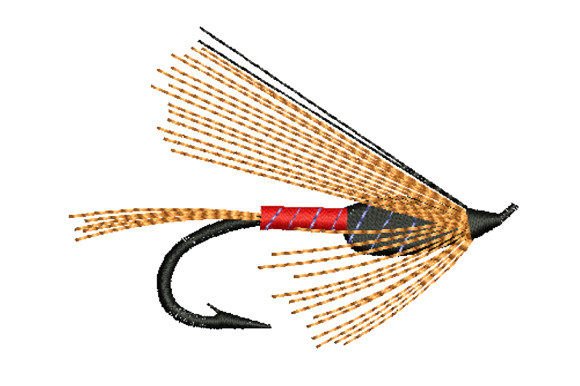
Review: Fishing Rod with Bait Embroidery Design
As a designer who has spent countless hours staring at digitized files and watching needles punch through fabric, I have developed a keen eye for what works in the real world. We often get swept up in the digital preview, where every line is crisp and every color is vibrant. However, the true test of any machine embroidery design happens under the presser foot. Recently, I evaluated the Fishing Rod with Bait design to determine its viability for client projects and personal craft business inventory. This piece, rooted in the Camping category, offers a distinct visual narrative that goes beyond generic outdoor motifs.
First Impressions and Visual Personality
The initial appeal of this design lies in its inspiration. It captures the unusual and beautiful shape of a fishing rod, focusing on the curvature and the delicate presence of the bait. Unlike aggressive or overly complex outdoor graphics, this design feels contemplative and balanced. For an embroidery project, this simplicity is often a strength. It suggests a mood of patience and appreciation for nature, which resonates well with customers looking for meaningful, understated decor or apparel.
When reviewing the layout, I noticed the design relies heavily on line work and shape rather than dense fill areas. This is crucial for maintaining clarity. In Embroidery, less is often more, especially when dealing with themes that require elegance rather than bulk. The visual personality here is professional yet approachable, making it suitable for a wide range of applications from high-end boutique branding to casual hobbyist gifts.
Real-World Application: The Tote Bag Test
To truly understand how Fishing Rod with Bait performs, I mentally placed it on a canvas tote bag, a staple for any Etsy seller or small shop product lineup. Canvas has a noticeable weave, which can sometimes swallow fine details. However, because this design emphasizes the silhouette of the rod, it holds up remarkably well against textured backgrounds. The contrast between the thread and the natural fabric creates a rustic, authentic look that appeals to the outdoor enthusiast demographic.
I also considered its use on a heavyweight cotton sweatshirt. Here, the design acts as a subtle chest emblem rather than a loud back print. For custom apparel, this placement is ideal. It allows the wearer to express their passion for fishing without the garment feeling like a uniform. The flow of the rod’s curve complements the natural drape of the fabric, ensuring the finished product looks intentional and high-quality.
Versatility Across Product Lines
Beyond bags and sweatshirts, this design shows promise in several other areas:
- Embroidered patch creation: The contained shape makes it easy to satin stitch around the border for a clean, professional edge.
- Baby embroidery: On a soft onesie or blanket, the gentle lines of the rod can be scaled down for a nursery theme that avoids being overly gendered or aggressive.
- Holiday embroidery: For Father’s Day or birthday gifts, this serves as a perfect personalized touch on aprons or kitchen towels.
- Commercial embroidery: It functions effectively as a logo for fishing teams or tackle shops, offering brand consistency without visual clutter.
Technical Considerations and Stitch Behavior
While the aesthetic is strong, a responsible designer must address the technical execution. Since the description highlights the "unusual shape," we must assume there are curves and potentially fine lines representing the bait or line. In machine embroidery, fine lines are typically created using running stitch or narrow satin stitch. If the digitizer used running stitch for the rod, it will lay flat and feel light on the fabric. If satin stitch was used, it will have more texture and sheen but requires precise tension control.
One area requiring caution is stitch density. If the bait element is small and detailed, it may suffer from thread breaks or bird-nesting if the density is too high for the scale. I recommend checking the embroidery file properties before stitching. If you are working with a digital embroidery file that allows editing, inspect the node points. Smooth curves are essential to prevent jagged edges in the final stitch-out.
For those considering this for caps or curved surfaces, be mindful of the hoop size and stabilization. A curved surface distorts the design slightly. The long, linear nature of a fishing rod might appear bowed if not hooped perfectly straight. Using a cut-away stabilizer is advisable for stretchy fabrics like jersey knits or performance wear often used in fishing apparel, while tear-away stabilizer may suffice for stable wovens like denim or canvas.
Navigating Fabric and Color Challenges
Color choice plays a pivotal role in the success of this design. On dark fabrics, such as navy or black jackets, lighter thread colors will make the rod pop, but you must ensure the bait detail remains visible. Conversely, on light fabrics, darker threads provide necessary contrast. I always advise testing the design in black and white mockups first. If the design loses its definition in grayscale, it may lack sufficient contrast for practical use.
Textured fabrics present another variable. Terry cloth towels or fleece blankets can obscure fine details. If you plan to use Fishing Rod with Bait on these materials, consider scaling up the design slightly or choosing a version with bolder outlines. For thin or stretchy fabrics, avoid large fill stitch areas if they exist, as they can cause puckering. The apparent minimalist nature of this design likely minimizes this risk, but verification is key.
Business Value and Customer Trust
For craft business owners and handmade product sellers, the perceived value of a design is tied to its cleanliness and professionalism. A messy stitch-out undermines customer trust. Because Fishing Rod with Bait appears to rely on clear shapes, it is easier to achieve a consistent, high-quality result across multiple items. This consistency is vital for building a recognizable brand.
Furthermore, this design fits well into the growing market for niche hobbies. Customers are increasingly seeking specific, relatable imagery rather than generic symbols. A fishing rod with bait tells a specific story—it implies the act of fishing, not just the sport. This emotional connection can drive higher engagement and sales for personalized gift items.
Pre-Production Checklist
Before committing to a large batch or a client order, follow these practical steps:
- Test on scrap fabric: Always stitch out a sample on the same material and weight you intend to use for the final product.
- Check thread contrast: Ensure the bait detail is visible against your chosen fabric color.
- Verify licensing: Confirm whether the design assets allow for commercial use if you plan to sell the finished product.
- Inspect small details: Zoom in on the digital preview to check for potential jump stitches or tight turns that might cause thread breaks.
- Review hoop size requirements: Ensure your machine’s hoop can accommodate the design dimensions without re-hooping.
In conclusion, Fishing Rod with Bait is a thoughtful addition to any designer’s library. It balances artistic inspiration with practical application, making it a versatile choice for everything from tote bag design to sweatshirt embroidery. By paying attention to fabric choice, stabilization, and thread selection, you can leverage this design to create products that are both visually appealing and durable. It is a reminder that in embroidery, as in fishing, patience and attention to detail yield the best results.