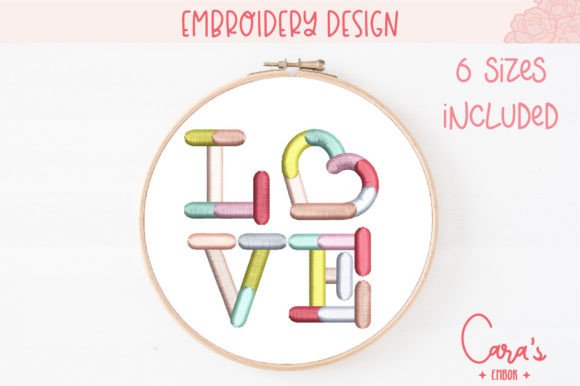
Love in Blocks: A Designer’s Review for Real Stitching
When I first pulled up Love in Blocks on my screen, I wasn’t looking for flashiness. As an embroidery designer who spends half my life troubleshooting puckered seams and broken needles, I look for reliability. I look for designs that translate well from a digital preview to actual thread on fabric. This design, categorized under House and Embroidery, caught my eye not because it was loud, but because it felt grounded. It has a structural integrity that suggests it was built with the limitations of home embroidery machines in mind.
The name itself hints at a geometric or modular approach to affection, which is a refreshing departure from the endless swirls of cursive script we see everywhere. In a world saturated with overly complex digitizing, a clean, block-style motif often stands out more effectively. It reads clearly from a distance, which is crucial if you are creating items meant to be worn or displayed in busy environments.
First Impressions and Visual Personality
The immediate mood of Love in Blocks is modern yet warm. It doesn’t scream for attention; it invites it. The layout appears balanced, avoiding the common pitfall of heavy density on one side that causes hoop drag. For those of us who sell handmade products, visual balance is everything. A lopsided design can make even the highest quality sweatshirt look amateurish.
I appreciate that the description explicitly states resizing or editing the design is not recommended. This is actually a good sign. It tells me the digitizer has optimized the stitch paths, underlay, and pull compensation for a specific size. When you alter a file arbitrarily, you risk distorting the stitch angles, leading to gaps or thread breaks. Knowing that this design has been tested and reviewed to ensure top quality gives me the confidence to use it in client work without second-guessing the technical execution.
Real-World Application: The Tote Bag Test
To truly evaluate a machine embroidery design, you have to imagine it in motion. I recently worked on a batch of custom tote bags for a local boutique. These were heavy canvas bags, intended for daily use. I considered using Love in Blocks for this project. Here is why it worked:
- Clarity on Texture: Canvas has a rough weave. Delicate satin stitches often get lost or sink into the texture. A block-style design typically uses fill stitches or robust running stitches that sit on top of the fabric, ensuring the message remains legible.
- Durability: Tote bags carry weight. They stretch and twist. A design with moderate stitch density, rather than excessive saturation, holds up better to physical stress. This design feels like it strikes that balance.
- Brand Consistency: For small shop owners, branding needs to be recognizable. The geometric nature of "blocks" lends itself well to a modern, minimalist aesthetic that appeals to contemporary buyers.
If you are an Etsy seller or craft business owner, think about how this design would look on a tea towel or a kitchen apron. These are high-wash items. The structural simplicity of Love in Blocks suggests it will survive repeated laundering better than intricate, fine-line details that might fray or loosen over time.
Fabric Considerations and Technical Notes
While this design is versatile, it is not magic. You still need to apply sound embroidery judgment. Here is how I would approach different materials:
Stretchy Fabrics: If you are applying this to a t-shirt or baby clothes, stabilization is non-negotiable. Even with a tested design, knit fabrics move. Use a cut-away stabilizer for garments that will be washed frequently. The block shapes may require careful hooping to prevent distortion, especially if the design covers a larger area.
Dark Fabrics: Always test your thread colors. A design that looks crisp on white might disappear on navy blue if the contrast isn't high enough. I recommend running a test stitch on scrap fabric before committing to your final garment. Check how the thread colors interact with the fabric texture. Sometimes, a slight adjustment in thread shade can make the blocks pop more effectively.
Curved Surfaces: Be cautious with caps or hats. While the design is likely optimized for flat hoops, placing geometric blocks on a curved crown can distort the perspective. If you must use it on a cap, ensure you are using the correct hat frame and stabilizer to keep the fabric taut.
Commercial Viability and Customer Trust
For commercial embroidery projects, consistency is key. When a customer orders a personalized gift, they expect the finished product to match the mockup. Because Love in Blocks is not meant to be edited, you eliminate the variable of human error in resizing. This protects your reputation. You aren’t guessing if the design will hold up; you know it has been reviewed for quality.
This reliability translates to buyer engagement. Customers trust clean, professional stitching. A messy design with loose threads or poor coverage undermines the perceived value of your handmade product. By choosing a design that is technically sound, you elevate the entire presentation of your brand.
Practical Designer Checklist
Before you load this embroidery file into your machine, run through this quick mental checklist:
- Check the Hoop Size: Confirm that your machine’s hoop accommodates the design’s native size. Do not try to force it into a smaller hoop by resizing.
- Select the Right Stabilizer: Match the stabilizer to the fabric weight. Heavy denim needs different support than lightweight linen.
- Thread Quality Matters: Use high-quality polyester or rayon thread. Cheap thread breaks more often and lacks the sheen that makes embroidery look premium.
- Test First: Always stitch out on a scrap piece of the same fabric. Check for puckering, thread breaks, or coverage issues.
- Review Licensing: Since this is a digital embroidery file, confirm the license terms. Can you sell finished items? Can you use it for digital mockups? Ensure you are compliant before listing products on Etsy or other platforms.
In conclusion, Love in Blocks is a solid addition to any designer’s library. It respects the mechanics of embroidery while delivering a modern aesthetic. It is not just a pretty picture; it is a functional asset for creating durable, attractive, and professional-grade embroidered goods. Whether you are making holiday embroidery gifts, nursery decor, or everyday apparel, this design offers the stability and style needed to succeed in today’s competitive craft market.